How do you play Number Slide?+
Click or tap any tile next to the empty square and it slides into the gap. Your goal is to order tiles 1-15 with the blank in the bottom-right. Only tiles adjacent to the empty space can move, and you solve it by sliding tiles one step at a time.
What is the 15-puzzle?+
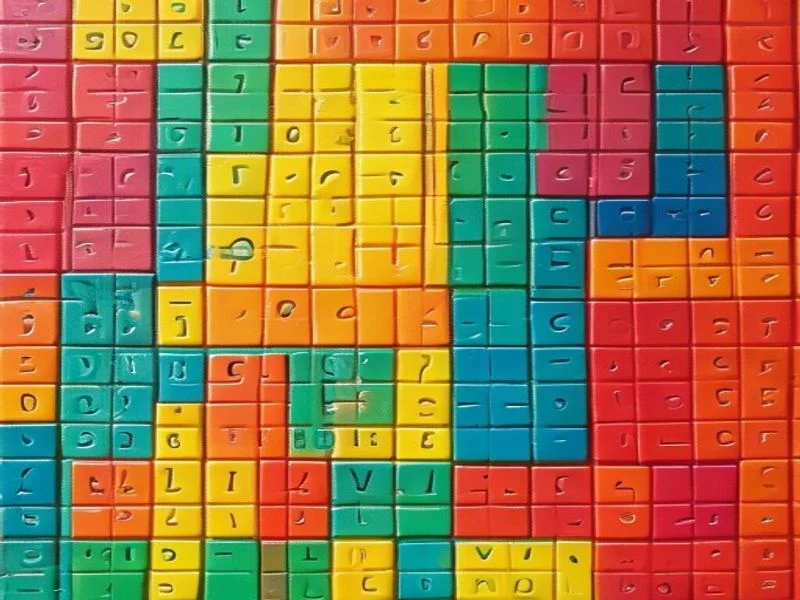
The 15-puzzle is a 4×4 sliding tile game with fifteen numbered tiles and one empty space. Invented in the 1870s, it became a worldwide craze. Number Slide is a modern, relaxed version of that classic sliding puzzle played on a grid.
Is every Number Slide board solvable?+
Yes. The boards are generated so they are always solvable. Randomly shuffling tiles by sliding the blank guarantees a reachable solution, so you will never be given an impossible configuration when you start a game.
Why are some 15-puzzle configurations impossible?+
Half of all random tile arrangements are unsolvable because of a parity rule: the number of inversions plus the blank's row from the bottom must be even. Our generator only produces solvable boards, so you never face an impossible one.
How do I solve the 15-puzzle?+
Solve it row by row from the top. Place tiles 1-4 across the first row, then 5-8, then 9-12, and finally arrange 13-15 with the blank in the corner. Keep the blank in the unsolved region to avoid disturbing finished rows.
What is the best strategy for Number Slide?+
Work top row first, then each row below, keeping the empty space in the bottom-right area. Protect solved rows from accidental moves and use the three-tile rotation trick to reposition single tiles. Systematic play beats random sliding.
How does sliding a tile work?+
Only a tile orthogonally adjacent to the empty space can move. Clicking or tapping it swaps it with the blank, which then moves to where the tile was. Diagonal moves are not allowed, and you can't move a tile that isn't touching the gap.
What does the move counter track?+
The move counter records every slide you make, one count per tile moved. It lets you measure efficiency, since a clean solve uses fewer moves. There is no penalty for many moves, but fewer moves means a better solve.
How difficult is Number Slide?+
Difficulty is gentle but grows with practice. Beginners can solve the top rows quickly; the last two rows require more planning. Because there is no timer, you can think freely, making it relaxing yet mentally engaging.
What is the history of the 15-puzzle?+
The 15-puzzle was popularized in 1880 by sam Loyd, though it was likely invented earlier by Noyes Chapman. Loyd offered a prize for an unsolvable version that was, in fact, impossible, which fueled its global popularity as a puzzle craze.
Is there a world record for the 15-puzzle?+
Yes. Speedcubers solve the physical 15-puzzle competitively, with world-class times under 20 seconds for a specific starting configuration. In Number Slide the 'record' is your own fewest moves, since boards vary each game.
Do you need a timer in Number Slide?+
No. Number Slide is untimed and pressure-free. You can solve at your own pace and focus on minimizing moves rather than racing the clock, which makes it a calm puzzle suited to casual play.
Tips for beginners?+
Start by placing tile 1 in the top-left, then build the top row across. Keep the blank below your working area, and don't worry about speed. Solving row by row with patience is the fastest way to learn the puzzle.
Can I play Number Slide on mobile?+
Yes. Number Slide is touch-friendly: just tap any tile next to the empty space and it slides in. No dragging or keyboard is needed, so it plays naturally on phones and tablets with a single finger.
Is Number Slide accessible?+
The game uses large, clearly numbered tiles and simple tap or click input, which works with common assistive setups. High-contrast numbers and straightforward controls make it approachable for many players.
What games are similar to Number Slide?+
Similar puzzles include the 8-puzzle (3×3 version), Klotski, Rush Hour, and other sliding block games. Any puzzle where you rearrange pieces within a constrained grid shares the same spatial reasoning appeal.
Can I undo a move?+
You can reverse a slide by moving the same tile back into the blank, since every move is reversible. There is no dedicated undo button described here, but stepping a tile back returns the board to its previous state.
Why does the blank matter so much?+
The empty space is the only way tiles move; it is effectively your single free slot. Managing where the blank travels lets you cycle tiles into position without disturbing solved areas, which is the heart of any good solving method.
How many moves does a typical solve take?+
A random but solvable 15-puzzle can need anywhere from a few dozen to over eighty moves for a clean solve. With practice and a row-by-row method, most players settle into efficient patterns well below the worst case.
Is there a guaranteed solving method?+
Yes. The human 'row-by-row' method always works: solve the top row and left column, then treat the remaining 3×3 (or 2×2) as a smaller puzzle. It is slower than optimal algorithms but never fails and is easy to learn.