How do I solve the 15-puzzle?+
The standard approach is row-by-row solving. Place the top row tiles in order, then the left column, then work inward. For the final 2x2 or 3x3 section, use known algorithms or simply rotate the remaining tiles until they click into place.
Is the empty space really necessary?+
Yes. The empty space is the only mechanic that makes a sliding puzzle solvable. Without it, there would be no way to shift tiles. The position of the empty space also determines how many moves are needed for a given shuffle.
Why can't I slide a tile that is not next to the empty space?+
Sliding puzzles are defined by the adjacency rule. Only tiles touching the empty space can move. This constraint creates the puzzle structure. Allowing any tile to jump would eliminate the challenge entirely.
Are all jigsaw puzzles solvable?+
Not every random shuffle is solvable. About half of all shuffles produce unsolvable states depending on the grid size. If you suspect your puzzle is stuck, look for a simple inversion count or use the restart button to generate a guaranteed solvable scramble.
What is the best grid size?+
Beginners enjoy 3x3 or 4x4 grids, which are solvable in a few minutes. Advanced players challenge themselves with 5x5 or 6x6 grids. This version uses a 4x4 grid as the default, with the option to increase difficulty.
Can the game show me the solution?+
No auto-solve feature is included. The satisfaction comes from figuring it out yourself. However, you can restart at any time if you become hopelessly scrambled.
Is there a timer?+
Yes. The timer runs from the moment you make your first move. Faster times earn better scores, but there is no penalty for thinking before you start sliding.
What does the reference image do?+
The reference image shows the original picture so you can see where each tile belongs. It is visible in a corner of the board throughout the game and can be toggled on or off depending on your preference.
Can I use arrow keys to play?+
Yes. When the game board has focus, arrow keys move the empty space in the corresponding direction. This keyboard control is useful for precise control on large grids.
How is the best score calculated?+
The best score favors fewer moves and faster times. The game stores your best completion in local browser storage so you can track improvement across sessions.
What image is used in the puzzle?+
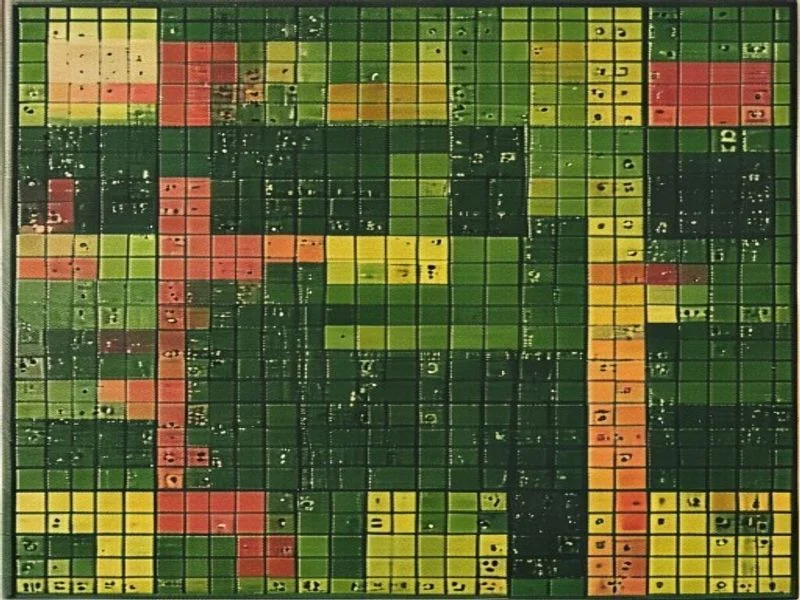
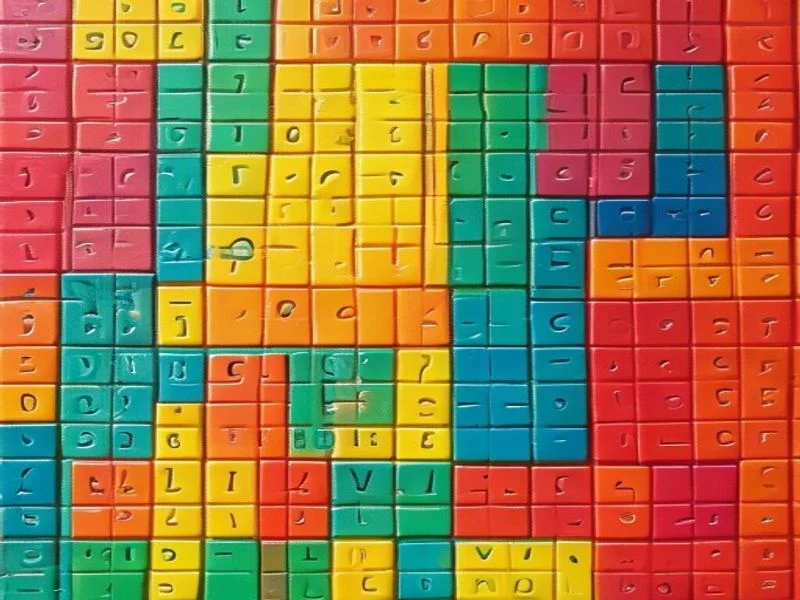
This version uses a procedurally generated colorful pattern that scales cleanly at any tile size. Future versions may add photographic options, but the geometric pattern ensures every tile remains readable.
Is this the same as the 15-puzzle game?+
Yes, conceptually. The classic 15-puzzle uses a 4x4 grid with 15 numbered tiles and one empty space. This version replaces numbers with image pieces so the goal is to restore a picture rather than arrange digits.
Can children play this?+
Absolutely. Sliding puzzles are excellent for spatial reasoning, planning, and fine motor skills. The colorful image and simple tap controls make it accessible to children as young as four with mild guidance.
Does the image change between games?+
The current version uses one carefully designed geometric pattern that tiles clearly at any resolution. Future updates may unlock multiple images as rewards for faster times.
Why does the board feel hard to solve randomly?+
Random shuffles of a sliding puzzle often produce unsolvable states because not every permutation is reachable through legal sliding moves. The game automatically generates solvable scramble states so you never waste time on impossible boards.