Playables
← All playables
2048 cover artwork
Playables

2048.

Merge matching numbered tiles to reach 2048 in this classic sliding puzzle.

How to play 2048

Goal

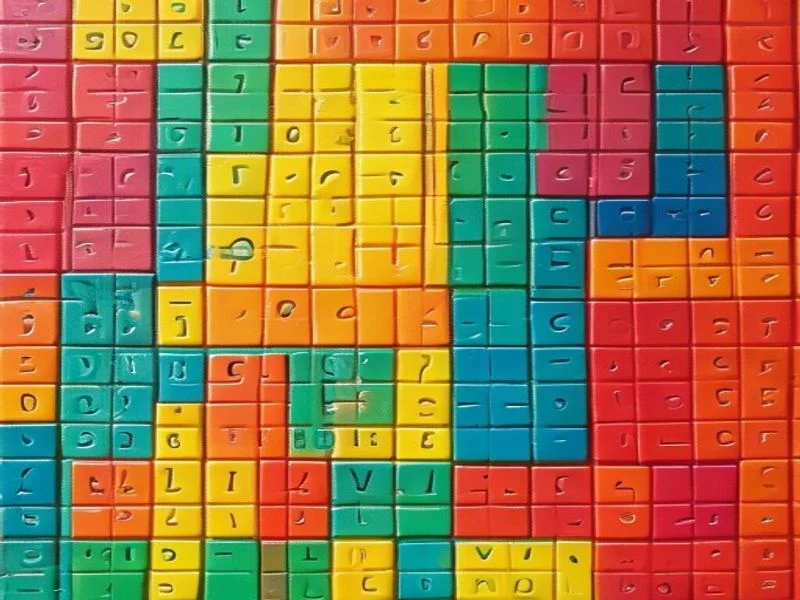
Slide numbered tiles on a 4×4 grid to merge matching pairs. Each merge doubles the value: 2+2=4, 4+4=8, and so on. Keep combining until you create a 2048 tile. The board fills up quickly, so every move must advance you toward the target.

How to play

Use arrow keys or swipe to move all tiles in one direction. Tiles with the same number collide and merge into their sum. After every move a new 2 or 4 tile spawns in an empty spot. Plan merges carefully because the new tile can block a promising sequence.

Strategy

Keep your highest tiles in one corner and build chains toward it. Avoid scattering large numbers across the board, because that fragments your merges. Try to maintain a clear path so tiles can slide freely when you need them to combine. Slow, deliberate moves usually outperform frantic swiping.

Example

You have a row 2-2-4-8 and swipe right. The two 2s merge into a 4, giving 4-4-8. Those 4s then merge into an 8, leaving 8-8. Another right swipe merges them into 16, freeing space and advancing the chain toward 2048.

Player instructions

Objective

Merge tiles to reach 2048 before the 4×4 board fills with no available moves.

Desktop controls

Press the arrow keys (up, down, left, right) to slide all tiles. Matching numbers merge automatically when they collide. Each move spawns a new 2 or 4 tile if an empty cell exists.

Mobile & touch controls

Swipe up, down, left, or right to shift the board. Tiles merge when they touch. The interface is fully touch-optimized with responsive sizing.

Winning conditions

You win when a tile with the value 2048 appears on the board. You can continue playing afterward to chase higher scores, but 2048 is the primary milestone.

Losing conditions

You lose when no empty cells remain and no adjacent tiles share the same value, meaning no further merges are possible. At that point the game ends and your score is recorded.

Tips for beginners

  • Keep your largest tile in a fixed corner to preserve merge chains.
  • Build in layers so merges cascade naturally rather than forcing them.
  • Avoid filling the center early; leave space for new tiles to enter the chain.
  • Think two moves ahead before sliding, especially near the endgame.
  • New 4 tiles appear about ten percent of the time, so plan for both possibilities.

Guides & strategies

Deep-dive articles to sharpen your 2048 skills.

2048 — Complete Guide

Master the merge mechanics, corner strategy, and high-score planning in this addictive number puzzle.

What Is 2048

2048 is a single-player sliding-tile puzzle played on a 4×4 grid. Tiles bearing powers of two slide in any direction, merging into their sum when they collide. A new tile appears after every move, steadily filling the board until you either reach 2048 or run out of space.

Core Mechanics

The controls are minimal: swipe or press an arrow key to shift all tiles as far as possible in that direction. Only one merge happens per collision per slide, which makes ordering critical. The spawn pool is roughly ninety percent 2s and ten percent 4s, so randomness is mild but real.

Corner Strategy

The strongest approach is corner anchoring. Pick one corner, usually bottom-right, and keep your largest tile there permanently. Build merge chains that flow toward that corner, and resist the temptation to shift tiles away for a quick merge. Disciplined corner play transforms the board from chaotic to predictable.

Common Mistakes

Beginners often make the mistake of chasing merges randomly, which scatters large tiles across the grid and fragments future chains. Another common error is filling the center early, leaving no room for new spawns to enter the merge stream. Slow, purposeful slides beat frantic swiping.

Chasing High Scores

Once the basics feel automatic, focus on score optimization. Delay merges only when they set up a larger future merge, and learn to read the board so you know which direction is safe even before you slide. Consistent high scores come from repetition, not speed.

Advanced 2048 Tactics

Push beyond 2048 with board-control techniques used by top players.

The Snake Pattern

The snake pattern is a popular advanced layout. Arrange tiles in a descending chain along the edges, like a snake coiling toward your corner. This keeps merges predictable and prevents the board from collapsing into an unmanageable mess during late-game spawns.

Managing 4 Tiles

Four tiles are dangerous because they interrupt merge chains. When a 4 appears, merge it quickly or position it so it does not block a future 2+2 merge. Treat 4s as temporary obstacles rather than permanent residents, and always have a plan to absorb them within two moves.

Endgame Planning

Endgame planning matters most when the board is half full. Before sliding, scan for empty cells and estimate where the next spawn will land. If a new tile would block your corner anchor, choose a different direction. Anticipation, not reaction, wins late games.

Speed vs Control

Speed is tempting but often harmful. Fast swipes skip the mental scan that prevents bad merges. Play slightly slower than feels natural, read the board, then slide. Control beats velocity every time, especially on mobile where gesture precision matters.

Building to 4096 and Beyond

Breaking past 2048 into 4096 and beyond requires flawless corner discipline. Each additional thousand doubles the tile density, leaving even less room for error. Keep one edge clean, merge systematically, and treat every tile as a step in a longer chain. The same principles that get you to 2048 carry you further.

Why 2048 Is Great for Your Brain

Explore the cognitive benefits of playing 2048 regularly and how it sharpens your mind.

Spatial Reasoning

2048 exercises spatial reasoning by asking you to visualize how tiles will shift and merge before you act. Predicting the outcome of a slide strengthens your brain's ability to manipulate objects in space, a skill that transfers to navigation, architecture, and everyday problem solving.

Working Memory

Working memory gets a workout because you must hold the current board state, track potential merges, and compare outcomes across directions simultaneously. Repeated practice expands the amount of information you can juggle at once, which helps with complex tasks in work and study.

Pattern Recognition

Pattern recognition improves as you internalize common board shapes and merge sequences. Experienced players spot a winning layout almost instantly, a skill built from thousands of micro-patterns. That ability to quickly classify and act on structure is useful far beyond the game.

Low-Stress Focus

Unlike many brain games, 2048 has no timer, no penalty for pausing, and no fail state until the board is truly full. This low-stress format lets you practice focus without anxiety, making it an ideal micro-break between demanding tasks.

Daily Habit Benefits

A short daily session builds durable cognitive gains. Consistency matters more than marathon play, so five to ten minutes a day is enough to sharpen merge intuition, improve board reading, and keep your mind agile. Over weeks you will notice faster decisions and cleaner layouts.

Frequently asked questions

How do you play 2048?

Use arrow keys or swipe to move tiles. Matching numbers merge into their sum. Reach 2048 to win. The game ends when the board is full and no merges remain.

What are the rules of 2048?

The board is a 4×4 grid. Every slide moves all tiles as far as possible. Equal numbers merge once per slide. After each move a new 2 or 4 tile spawns in an empty cell. You win at 2048; you lose when stuck.

What is the highest tile in 2048?

The target is 2048, but skilled players can reach 4096, 8192, and beyond. The theoretical limit depends on board space and merge planning. Many players treat 2048 as the finish line and continue for higher scores.

What is the best strategy for 2048?

Anchor your largest tile in a corner and build merge chains toward it. Keep one direction free for new spawns, and avoid moving tiles away from your corner. Plan ahead so merges happen without forcing awkward reshuffles.

How do you get a 2048 tile?

Consistently merge smaller tiles toward your chosen corner while leaving room for new pieces. Build a chain of doubles: 2→4→8→16→32→64→128→256→512→1024→2048. Patience and corner discipline are more important than speed.

Is 2048 a strategy game or luck?

It is mostly strategy with a small luck element. The new tile is random, but skilled players can absorb almost any spawn by maintaining a clean board and a strong corner anchor. Good planning reduces the impact of luck.

Can you undo moves in 2048?

This browser version does not include an undo button to keep the interface simple. Think carefully before each slide, and treat every move as final. Planning ahead reduces the need to backtrack.

What is a good 2048 score?

Reaching 2048 is a solid milestone for most players. Scores above 4000 or 8000 indicate strong board control. Focus on consistent corner play rather than chasing a specific number, and your score will grow naturally.

Why does a 4 tile sometimes spawn?

A 4 appears roughly ten percent of the time instead of a 2. It is intentionally rarer to increase late-game challenge. Treat 4s as opportunities to merge quickly rather than obstacles, and keep your corner clear to absorb them.

Is 2048 suitable for kids?

Yes. The rules are simple, the colors are bright, and there is no violence or time limit. It teaches planning, addition, and spatial reasoning in a low-pressure format. Kids can play at their own pace and learn by experimenting.

Can you play 2048 on mobile?

Yes. Swipe in any direction to move tiles. The board scales to fit any screen, and touch targets are large enough for comfortable play. No app install is required.

Is 2048 free to play?

Yes. This version runs in your browser with no cost, no account, and no download. Open the page and start sliding immediately. Your progress stays private on your device.

What makes 2048 so addictive?

The combination of simple rules, satisfying merges, and a clear progression goal makes it easy to pick up and hard to put down. Each win feels earned, and the urge to beat your last score keeps players returning for one more game.

What games are similar to 2048?

Threes, 1024, and 2048 Hexagon use the same merge mechanic with different layouts. Any sliding-tile puzzle trains similar planning skills. Sudoku and number-based match games offer comparable brain exercise.

How can I improve my 2048 score?

Pick one corner and never force tiles away from it. Keep the path open for merges by avoiding random slides, and plan two moves ahead. Watching replays of strong players helps you internalize better board shapes.

Does 2048 ever end?

The game ends only when the board is full and no adjacent tiles match. You can continue after reaching 2048 if empty space remains, so the true end is determined by your board management rather than a fixed level count.