Stack Tower is the kind of game you open for thirty seconds and close an hour later wondering where the time went. A block slides in from the side. You tap. It lands on the tower, or it does not quite, and whatever missed gets sliced off and dropped into the void. The tower gets a little narrower and a little taller. That single loop, tap and trim, is the whole game, and it is quietly ruthless. You can jump straight into Stack Tower to feel it under your thumb, but a few minutes of reading will save you a dozen frustrating restarts.
This guide assumes nothing. No arcade background, no rhythm-game reflexes, no vocabulary. By the end you will understand what the screen is telling you, how the tap actually works, why the tower shrinks when you misjudge, how points are awarded, and how to stop the early-game collapses that send most beginners back to the menu.
What Stack Tower Actually Is
At its core, Stack Tower is a timing and precision game. A flat block moves back and forth across the top of the structure you are building. Your only job is to tap at the moment the moving block lines up with the block beneath it. The cleaner the alignment, the more of the block you keep. The sloppier the timing, the more gets shaved away.
What makes it stick is the snowball. A small miss on block five is barely visible. The same small miss, repeated, turns the tower into a thin spire that topples the instant your timing slips. The game is a slow argument between your patience and your reflexes, and early on the reflexes usually win. If you enjoy that tension, Block Blast offers a different flavor of spatial pressure, while Color Match scratches the same itch for precision without the falling anxiety.
TIP On your first runs, ignore the score entirely. Your only goal is to keep the tower wider than your thumb. Survival early beats points every time.
The Controls, Plain and Simple
There is exactly one control: tap anywhere to drop the moving block. On desktop that is a click or a spacebar press; on a phone it is a tap anywhere on the screen. There is no aiming, no dragging, no second chance after the tap. The block falls the instant you commit, and the game decides how much of it survives based on where it landed relative to the one below.
- The moving block: slides left and right above the tower, reversing at the edges.
- Your tap: freezes it and drops it straight down onto the top of the stack.
- The overlap: the part of the new block sitting above the block beneath it is what you keep.
- The overhang: any part hanging off the edge is sliced away and lost forever.
That is the entire control scheme. The depth comes not from complexity but from how unforgiving a single button becomes once the margins tighten.
How the Tap Timing Works
Timing is everything because the moving block travels at a steady pace and reverses at the edges. Beginners often tap the instant they see the blocks touching, but the block is still moving, so it slides past the moment of contact before it drops. You are not tapping to react; you are tapping to predict where the block will be when it lands.
The cleanest way to build this skill is to watch the rhythm rather than the gap. The block reaches the same point on each pass, so if you tune into the sweep instead of staring at the seam, your taps start landing before you consciously think about them. This is the same muscle that Match the Feel trains in a softer, less punishing way, and it is worth warming up there if the timing feels alien at first.
TIP Stop watching the moving block as a thing to catch. Watch the block beneath it as a target zone, and tap when the moving block enters that zone, not when it leaves it.
Why the Tower Shrinks
This is the question every new player asks, usually right after their third collapse. The tower shrinks because the game keeps only the part of each new block that overlaps the block below it. Imagine a deck of cards where every card you place must sit entirely on the one beneath. If you set a card half off the edge, the overhanging half does not magically hang in the air. It falls. Stack Tower simply makes that physical rule visible and instant.
So a perfect tap leaves the tower the same width and one block taller. A sloppy tap trims the overhang and leaves the tower narrower. The next block then has less room to land on, which raises the chance of another trim, which narrows it further. The tower does not shrink because of a penalty. It shrinks because you are literally losing material with every imprecise placement.
The tower is never punished for your mistakes. It simply shows you, block by block, exactly how much of your work you failed to land on solid ground.
How the Slice Is Calculated
The cut is not random and it is not rounded generously. The game measures the horizontal overlap between the dropped block and the supporting block. Whatever does not overlap is removed from both the visible tower and your future landing area. Miss by a sliver and you lose a sliver; miss by half and you lose half. There is no forgiveness buffer, which is why the first clean runs feel so rewarding and the first sloppy ones feel so final.
How Scoring Works
Points are awarded per successfully placed block, and the structure rewards consistency more than heroics. A perfectly aligned block often marks a "perfect" and can grant a small combo or a width bonus that restores a sliver of the lost edge, depending on the build. The table below frames the three outcomes you will see on almost every drop:
| Outcome | Overlap | Effect on Tower | Score Impact |
|---|---|---|---|
| Perfect | Full alignment | Width kept, may restore edge | Full points, combo builds |
| Good | Partial overlap | Tower narrows by the miss | Points minus trim penalty |
| Miss | No overlap | Game ends | Run is over |
The crucial lesson for beginners is that score follows survival. A run of forty clean blocks beats a run of ten flashy ones every time, because each block is a point and the tower that stays wide lets you keep earning them. The number on the screen is really just a record of how long you refused to topple.
Beginner Tips That Actually Help
Most beginner advice for this game is useless because it says "be precise" without saying how. These are the habits that move the needle in the first week of playing:
- Find a beat. The block moves at a fixed speed, so tap on the rhythm of its sweep rather than reacting to each pass.
- Watch the base, not the block. Keep your eyes on the top edge of the tower below; that is your landing zone.
- Slow your breathing. Tension tightens the thumb and ruins timing. Relax between taps.
- Do not chase perfects. Early on, a clean good is better than a risky perfect that clips the edge.
- Recover width when you can. If a perfect restores a sliver of edge, take it; it buys future margin.
- Stop after a collapse spiral. Once the tower is thin, walk away and restart fresh rather than feeding the panic.
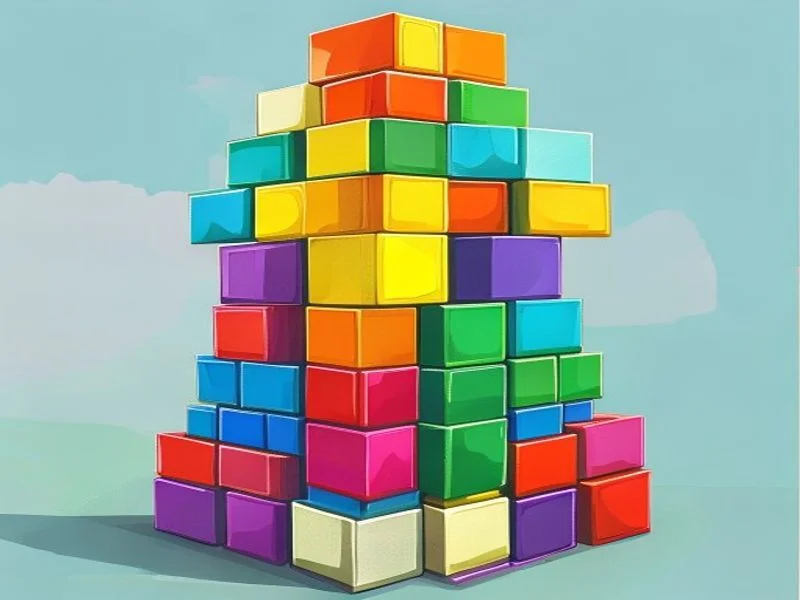
Build your first steady tower
Open the game and aim for survival over score. Ten clean blocks beats one flashy perfect.
Play NowCommon Mistakes Beginners Make
The failure patterns are remarkably consistent across new players, and naming them is half the cure. The first is tapping on sight rather than on rhythm, which guarantees a late drop. The second is staring at the moving block instead of the target zone, which removes the reference you actually need. The third is panic-tapping once the tower gets thin, which converts a recoverable wobble into a guaranteed topple.
Chasing the Perfect Too Early
Perfects feel great and the game rewards them, but a beginner hunting perfects is a beginner clipping edges. Early runs should be about width, not style. Lock in clean, conservative placements, let the combo build naturally, and only start reaching for perfects once your baseline timing is reliable. The tower you keep wide is the tower you get to score on later.
What to Take Away
- One control: tap to drop the moving block onto the tower.
- The tower keeps only the overlap; the rest is sliced off.
- Shrinking is physical, not a penalty: you lose real material.
- Score follows survival, so protect width above all.
- Tap on rhythm, watch the base, and breathe.
- Chase perfects only after your timing is consistent.
Put the guide to work
Start a run with survival as your only goal and watch how much further you get.
Start PlayingFrequently Asked Questions
What is the goal of Stack Tower?
The goal is to stack moving blocks on top of each other as neatly as possible. You keep only the part of each block that overlaps the one below, so the tower grows taller while you try to keep it from narrowing or toppling. The run ends when a block misses the tower entirely.
How do you control the game?
You use a single input: tap, click, or press space to drop the moving block. There is no aiming or dragging. The block falls the moment you commit, and the game keeps the overlap and slices off any overhang.
Why does the tower get smaller?
The tower shrinks because only the overlapping portion of each new block is kept. Any part hanging past the edge is removed. A small miss trims a little; repeated misses trim a lot, leaving a thin spire that is easy to topple.
How is the score calculated?
You earn points for each block you place, with bonuses for perfect alignment and combo streaks. Because score is tied to how many blocks you successfully stack, the longest surviving run usually wins. Protecting the tower width is the surest way to raise the number.
What counts as a perfect?
A perfect is a drop where the moving block lines up almost exactly with the block beneath it. Many builds mark it visibly and may restore a sliver of lost width or add combo points, which is why perfects matter more for recovery than for raw points.
Is there a way to regain lost width?
Yes, in builds that reward perfects. A clean perfect can return a small amount of the trimmed edge, slowly rebuilding margin. It is not a full reset, but stacking several perfects in a row can widen a tower that was drifting toward a collapse.
Why do I keep toppling early?
Early topples usually come from reacting to the block instead of its rhythm, or from staring at the moving piece rather than the landing zone. Slow down, find the sweep's beat, and keep your eyes on the top edge of the tower below.
Does speed help or hurt?
Speed hurts early and helps later. Rushing invites clipped edges and panic taps. Once your timing is reliable, faster, steadier taps keep the rhythm going, but there is no score bonus for haste, so never sacrifice alignment for speed.
Which other games build the same skills?
Block Blast trains spatial placement under pressure, Color Match sharpens precision without a fall penalty, and Match the Feel warms up the timing reflex in a gentler setting. All three complement Stack Tower without replicating its collapse anxiety.
Can I play on desktop and mobile?
Yes. The control maps to a click or spacebar on desktop and a tap on touch devices, so the skill transfers directly. Players often find phone play more natural because the tap is a single thumb motion with no cursor to track.
Sources & References
- Wikipedia, "Stack (video game)" — overview of the stacking-game genre and the core overlap mechanic.
- Wikipedia, "Reaction time" — background on how timing and prediction shape one-input arcade play.
- MDN Web Docs, "KeyboardEvent" and "Pointer events" — reference for the click, tap, and spacebar inputs the game uses.

Dev is part of the Playables editorial team. He covers arcade, reflex, and casual games, with a soft spot for timing-based high-score chases and relaxing browser breaks.
Frequently asked questions
What is the goal of Stack Tower?
The goal is to stack moving blocks on top of each other as neatly as possible. You keep only the part of each block that overlaps the one below, so the tower grows taller while you try to keep it from narrowing or toppling. The run ends when a block misses the tower entirely.
How do you control the game?
You use a single input: tap, click, or press space to drop the moving block. There is no aiming or dragging. The block falls the moment you commit, and the game keeps the overlap and slices off any overhang.
Why does the tower get smaller?
The tower shrinks because only the overlapping portion of each new block is kept. Any part hanging past the edge is removed. A small miss trims a little; repeated misses trim a lot, leaving a thin spire that is easy to topple.
How is the score calculated?
You earn points for each block you place, with bonuses for perfect alignment and combo streaks. Because score is tied to how many blocks you successfully stack, the longest surviving run usually wins. Protecting the tower width is the surest way to raise the number.
What counts as a perfect?
A perfect is a drop where the moving block lines up almost exactly with the block beneath it. Many builds mark it visibly and may restore a sliver of lost width or add combo points, which is why perfects matter more for recovery than for raw points.
Is there a way to regain lost width?
Yes, in builds that reward perfects. A clean perfect can return a small amount of the trimmed edge, slowly rebuilding margin. It is not a full reset, but stacking several perfects in a row can widen a tower that was drifting toward a collapse.
Why do I keep toppling early?
Early topples usually come from reacting to the block instead of its rhythm, or from staring at the moving piece rather than the landing zone. Slow down, find the sweep's beat, and keep your eyes on the top edge of the tower below.
Does speed help or hurt?
Speed hurts early and helps later. Rushing invites clipped edges and panic taps. Once your timing is reliable, faster, steadier taps keep the rhythm going, but there is no score bonus for haste, so never sacrifice alignment for speed.
Which other games build the same skills?
Block Blast trains spatial placement under pressure, Color Match sharpens precision without a fall penalty, and Match the Feel warms up the timing reflex in a gentler setting. All three complement Stack Tower without replicating its collapse anxiety.
Can I play on desktop and mobile?
Yes. The control maps to a click or spacebar on desktop and a tap on touch devices, so the skill transfers directly. Players often find phone play more natural because the tap is a single thumb motion with no cursor to track.